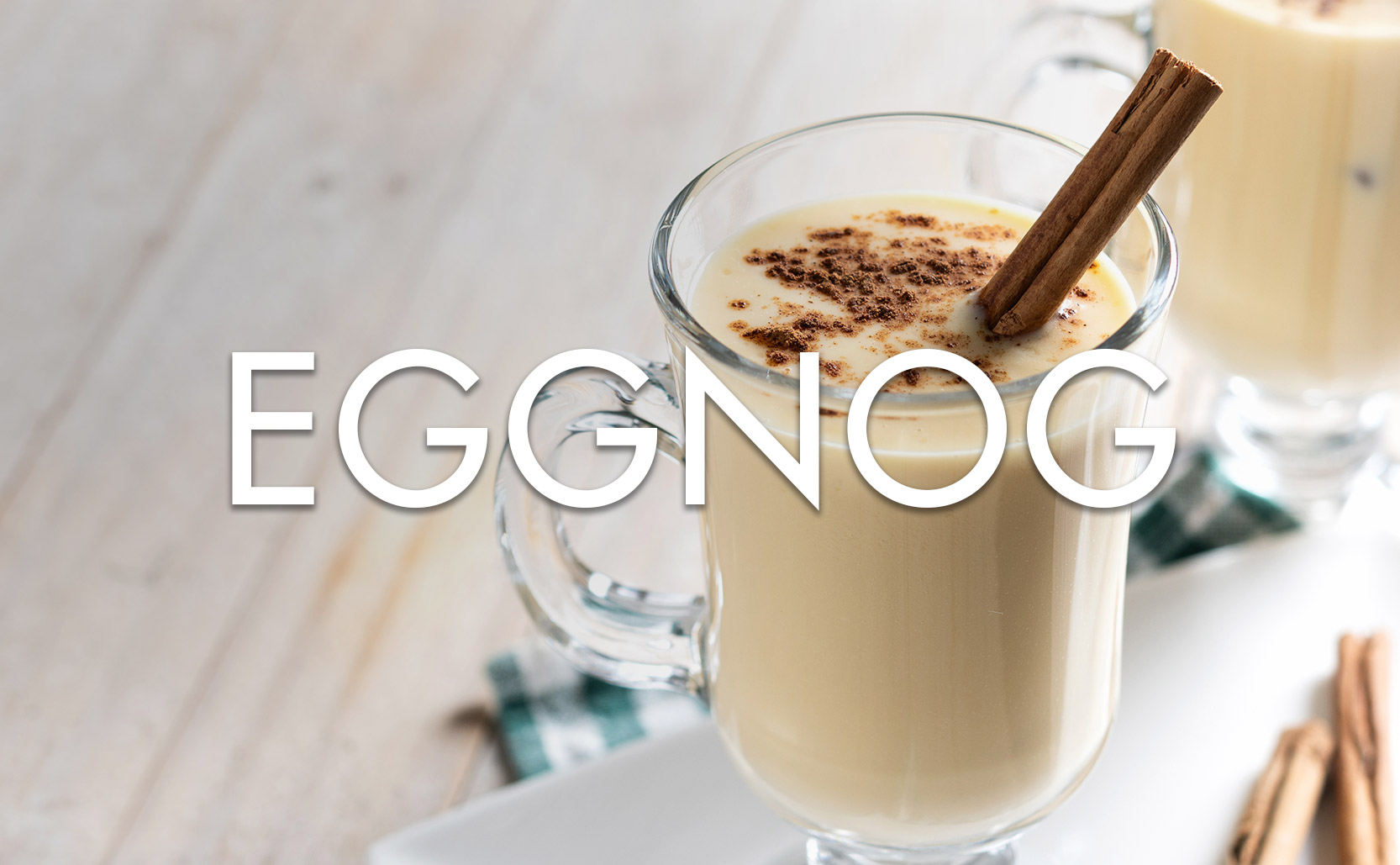
Eggnog
Wintry milk-based alcoholic drinks are a centuries old tradition found around the world.
When it’s hot out, people want cold drinks, When it’s cold out, people want hot drinks. In the northern hemisphere cold days are a part of the winter holidays and hot drink are a part of the seasonal traditions. Mulled wine (aka wassail), spiced apple cider, a hot toddy, hot chocolate, and eggnog are just some of the warm drinks people have created over the centuries to stay warm and celebrate the holidays.
Posset, the predecessor to egg nog
Before there was eggnog there was posset. Posset was a medieval English concoction of warm milk or cream, with wine or ale, and spices. Monks added eggs, figs, and or sherry taking posset to a more luxurious level due to the expensive additional ingredients.
The alcohol in posset, in addition to being enjoyable, helped kill bacteria which allowed the drink to last longer in a time before modern refrigeration or preservatives.
Unlike how we think of eggnog today posset wasn’t only for Christmas. People enjoyed posset all year round but the cold months were best as posset was thought to be a cold & flu remedy. Shakespeare mentions posset in several stories perhaps most notably when Lady Macbeth uses it as the delivery method to drug King Duncan’s guards.
Coming to America / Ch ch ch changes
Posset went through changes when it came to North America – the alcohol changed, the seasonality changed, and the name changed.
British colonists brought posset with them but the alcohol of choice became rum. The Atlantic slave trade made Caribbean rum a cheap accessible substitute for the more heavily taxed wine or sherry. Eventually rum was replaced with whiskey which could be produced domestically and didn’t rely on trade.
The name also changed. Posset became eggnog but nobody is sure why (although numerous theories exist). A nog was a strong beer but a noggin was a small wooden mug used to serve alcohol. The “egg” is most likely because it’s an ingredient. “Egg-n-grogg” was in use in mid 18th century colonial America and by 1774 the drink was known as eggnog.
The shift towards being a seasonal Christmas beverage, and not an all year round drink, also began after posset came to North America.
Variations on a theme
So what is the exact recipe for eggnog? There isn’t one. From handed down family recipes to food blogs there are many variations of how to make eggnog. What remains constant is some kind of alcohol, milk or cream, eggs, and spices. Even using the same basic ingredients, but preparing them differently, will produce a Tom and Jerry instead of eggnog, which is lighter and not as thick as eggnog.
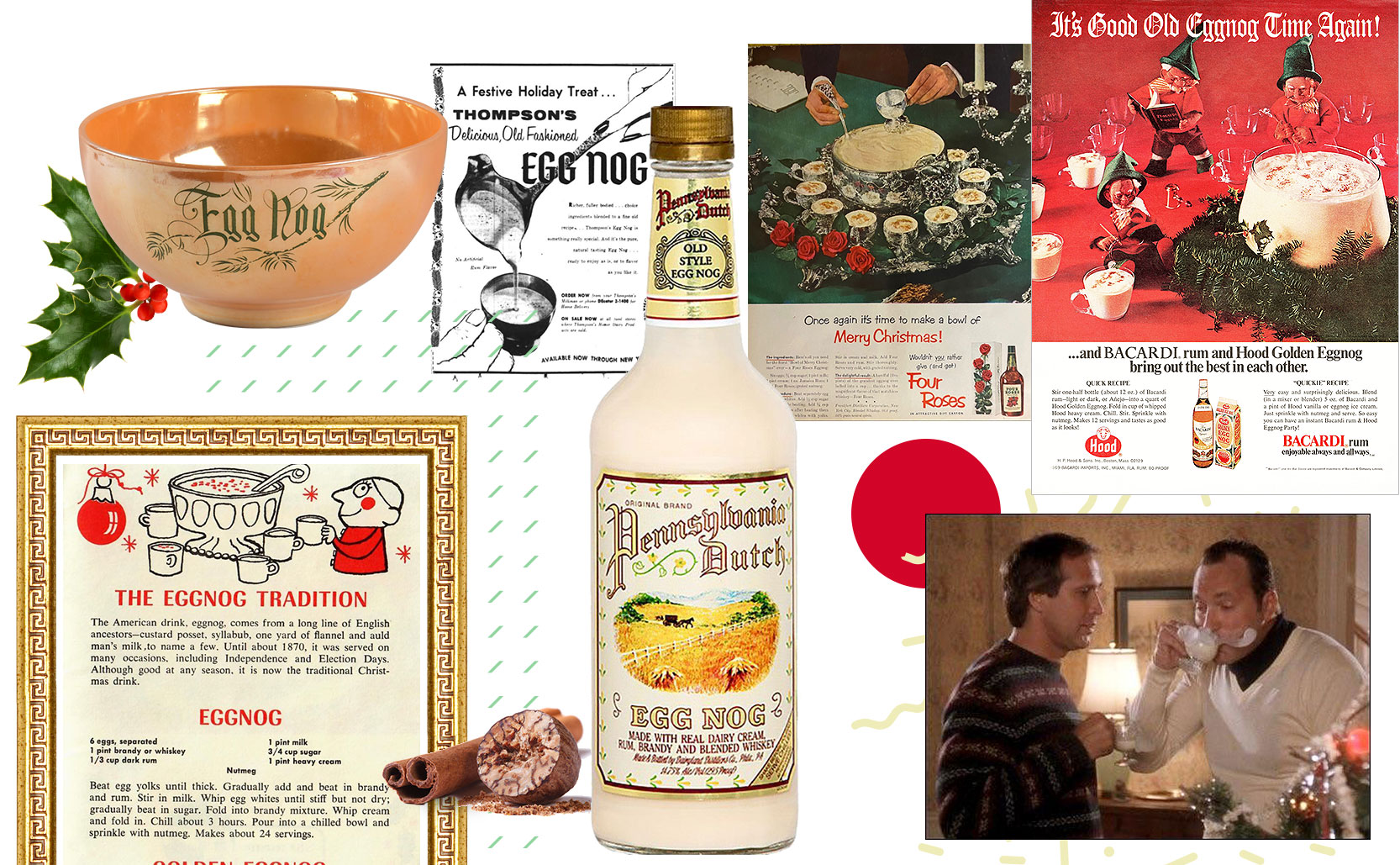
Pennsylvania Dutch brand Egg Nog (produced by Jacquin in the Kensington neighborhood of Philadelphia) is one of the top producers of eggnog in America. They use a blend of whiskey, rum, and brandy for the alcohol along with cream, eggs, sugar & spice.
International versions of eggnog use local alcohols and flavors creating tasty variations. Puerto Rico has coquito which uses coconut milk or cream. Mexico has rompope which uses egg yolks, making the drink more yellow than eggnog. Germany and Austria have eierpunsch which uses white wine as its alcohol along with vanilla spice. Several Caribbean countries (Curaçao, Aruba, Bonaire, the Dominican Republic) have pistachio ponche crema which features pistachio.
Added info: In 1826 cadets at West Point staged a drunken mutiny at Christmas, with shots fired, after they snuck in whiskey to make eggnog. Jefferson Davis was a cadet at the time and took part in the riot.
George Washington had his own recipe for eggnog which used rye whiskey, rum, and sherry.
Jazz legend Charles Mingus had his own recipe for eggnog that was said to have enough alcohol to “put down an elephant”.